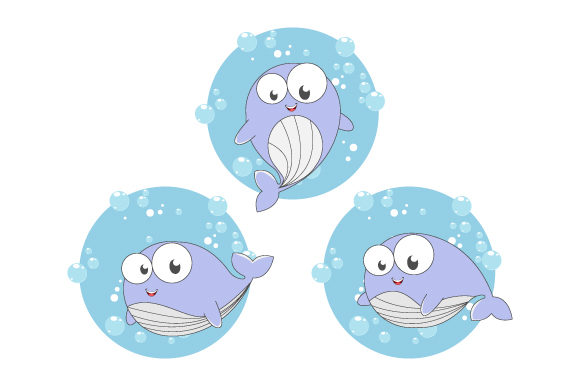
Cute Whale Animal Cartoon: Your Go-To Playful Design Asset
There’s a specific challenge in design that rarely gets discussed: how to convey genuine warmth and approachability without sacrificing professionalism. We often default to clean sans serif fonts or elegant serifs to signal seriousness, but what happens when your project needs a heartbeat? This is where a distinct visual element, like the Cute Whale Animal Cartoon, becomes more than just a file—it becomes a strategic tool for connection.
If you've downloaded the ZIP file containing the SVG 1.1 format, Ai 10 format, EPS, and JPGs, you have a versatile toolkit at your fingertips. This isn't just a simple doodle; it's a piece of character design that bridges the gap between professional graphics and emotional resonance. Let's break down how to actually use this asset to elevate your work, whether you are building a brand identity or crafting the perfect social media graphics.
Defining the Visual Personality
Before placing this element into a layout, you need to understand its voice. The Cute Whale Animal Cartoon typically features soft, rounded geometries. Think about the anatomy: there are no sharp edges or aggressive angles. The curves mimic the gentle nature of the animal itself, creating an immediate sense of safety and friendliness.
The visual style here leans heavily into modern flat design or soft gradients, depending on the specific rendering. Because it is an animal character, it carries a narrative weight that a standard display font or abstract icon cannot. It suggests playfulness, creativity, and a non-corporate atmosphere. However, "cute" does not mean "childish." In the context of modern typography and design, these rounded forms are often used by tech startups, wellness brands, and educational platforms to soften complex messages.
Strategic Applications for Creatives and Businesses
So, where does the Cute Whale Animal Cartoon actually fit? The answer lies in versatility. Because you have access to vector formats (SVG and EPS) and raster formats (JPG), you can scale this asset for almost any medium without losing quality.
Digital Presence and Web Design
In web design, character illustrations are currently dominating the landscape. They are excellent for breaking up dense text or guiding users through a user interface. You could use the whale as a mascot for a 404 error page, a "Success" state for a form submission, or as a visual anchor for your "About Us" section. It softens the digital experience and makes a website feel less like a machine and more like a conversation.
Branding and Logo Design
When it comes to logo design, incorporating an illustration requires a delicate touch. The Cute Whale Animal Cartoon works best as a logomark or a secondary mascot rather than the entire wordmark. It pairs exceptionally well with a bold, clean sans serif font or a quirky script font. This contrast—between the structured text and the organic illustration—creates a balanced visual hierarchy.
Packaging and Editorial Design
For those in packaging design, this asset adds instant shelf appeal. It suggests that the product inside is fun, safe, or eco-friendly. Similarly, in editorial design, such as newsletters or blog headers, the whale can serve as a recurring motif that builds brand recognition over time.
Technical Guidance and Workflow Integration
Having the right file is half the battle; knowing how to implement it is the other half. Here is practical guidance on integrating this premium font asset into your workflow.
- Leverage the Vector Formats: The SVG and AI files are your best friends. Use these for anything that needs to be printed or resized significantly. In Adobe Illustrator or Figma, you can easily change the color palette of the Cute Whale Animal Cartoon to match your specific brand identity. If your brand uses a pastel palette, recolor the whale to fit.
- Test Your Font Pairings: This character has a lot of personality, so your typography needs to support it, not fight it. Avoid using overly decorative handwritten fonts or complex serif fonts directly next to the illustration, as it can become visually noisy. A geometric sans serif usually provides the best legibility and contrast.
- Consider the Context: If you are using the JPG format for quick social media mockups, ensure the resolution is high enough for retina displays. However, for production-quality assets, always start with the vector source.
Influencing Perception and Engagement
Why go through the trouble of using a character illustration? Because it directly impacts how your audience feels about your brand. In a sea of sterile, corporate imagery, the Cute Whale Animal Cartoon acts as a pattern interrupt. It triggers an emotional response—usually a smile or a sense of curiosity.
This emotional engagement is crucial for content creators and marketers. It increases the likelihood that a user will stop scrolling. It humanizes a small business owner. It makes an educational topic feel less intimidating. While a creative font sets the tone of your voice, an illustration like this sets the tone of your personality.
Ultimately, design assets like this are about efficiency and impact. You aren't just buying a graphic; you are acquiring a tool that helps articulate a complex brand trait—friendliness—in a split second. Whether you use it for a children's book, a marine biology blog, or a playful coffee brand, the application is limited only by your willingness to experiment with modern typography